Mark's Musings

A miscellany of thoughts and opinions from an unimportant small town politician and bit-part web developer

27 March 2017
by mark
0 comments

Necessary hashtags and the art of detecting media bias

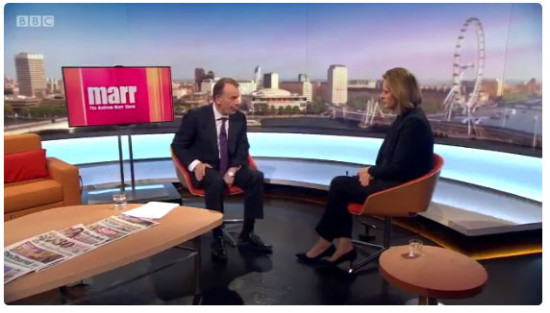
Twitter (or, at least, my particular Twitter bubble) has been busy this last 24 hours pouring scorn on the Home Secretary’s apparent admission in the Andrew Marr show on BBC1 (and later, in conversation with Sophy Ridge on Sky News) that she would consider legislating to force communication suppliers, such as WhatsApp, to break their encryption systems so as to permit governments to access messages.

I’m not going to rehash all the reasons why breaking or weakening encryption is wrong. Plenty of people more knowledgeable about it than me have already done that. I’m more interested in how she ended up making such a statement in the first place.

First, some background. The idea of forcing communication suppliers to add “backdoors” into their systems has been floating around for a long time, particularly in policing circles, as it would clearly be beneficial in some cases to be able to get at the content of every electronic message. So this is a proposal that tends to bubble up every time there is a major terrorist or criminal incident.

Such proposals have never actually come to anything, though, partly because they don’t stand up to technical scrutiny but also because they would be firmly resisted by many large and influential corporations – like banks and other financial institutions – as well as other government agencies which themselves rely on encrypted communications.

So, how did it crop up again this time, and why was the Home Secretary so willing to countenance it?

It’s important here to see the whole thing in context. If you haven’t already watched the full interview with Andrew Marr, then do so now on iPlayer before it expires. Because it’s clear that the first person to say something stupid in that exchange wasn’t Amber Rudd, but Marr. He introduced the topic of end to end encryption, made a complete hash of explaining it, and then invited Rudd to agree with him that it is “completely unacceptable” that the government can’t access terrorists’ messages on it.

This is intellectually unsustainable, but political dynamite. Rudd could not, realistically, disagree with him – imagine the tabloid headlines if she had dared to suggest that it is acceptable for criminals to be able to communicate in secret – but neither could she agree without falling straight into the trap that Marr had laid for her.

It was clear from that exchange that Rudd is not only uninformed about how encryption works, but was uncomfortable discussing it. It’s easy to mock her misguided use of terminology, but when she tried to divert the conversation into an area of safer ground, Marr dragged it back. It was, essentially, two people talking about something neither of them really understands, but both agree that it’s a bad thing.

Having fallen headlong into Marr’s elephant trap, though, Rudd couldn’t easily crawl out of it. This was more of an issue later on Sky News, on Ridge on Sunday. Unlike Marr, Sophy Ridge had done her homework, and was able to point out the glaring inconsistency between Rudd’s assertion that she fully backed strong encryption with the threat to legislate against it. But it was too late for Rudd to row back on the statements she had made to Marr, so instead she had to resort to the usual political trick of speaking firmly, keeping a straight face and refusing to acknowledge the contradiction in the hope that viewers would hear what they wanted to hear.

The real question this raises is: why was Rudd so poorly briefed in the first place? Given that it had already been publicised that Adrian Elms had used WhatsApp shortly before murdering four people, why was it not anticipated that the question of accessing it would crop up? Why couldn’t Rudd have defused Marr’s line of questioning by pointing out to him that he didn’t understand how it worked?

I can only speculate here, but it seems to me that this is an issue with the Home Office which goes back a long way – it was clearly visible during Theresa May’s time as Home Secretary, and even before before that under the last Labour administration. The hiving off of Home Office functions into the newly created Ministry of Justice was one attempt to deal with a department that former Home Secretary John Reid once described as “Not fit for purpose”. But this has seemingly resulted in not one, but two dysfunctional ministries.

The particular problem with the Home Office has been a long standing disregard of personal liberty, combined with an ill-concealed contempt for the tech sector. Apart from legislation drafted by the Home Office which combines illiberality with technical infeasibility, this has repeatedly manifested itself in a lack of desire to engage with reasonable and informed criticism. Ministers are left unbriefed, and in danger of looking stupid (as both Rudd, May and their Labour predecessors did, regularly, when talking about Internet-related issues), because there is a perception that the general public, and the tabloid media, doesn’t care about the details. Only nerds care, and nerds don’t matter.

I don’t believe that the government will legislate to force companies to break encryption. There would be too much opposition, both internally and from industry, for that to happen. But we will carry on getting these kites being flown every time there is a terrorist incident, until this anti-tech and anti-freedom factor within the Home Office is rooted out. Ministers could make a start by insisting on being properly briefed in future, and hiring a few SpAds who understand the issue and can offer unbiased advice.


While I’m on the subject (and apologies if this is turning into too much of a long read), consider for a moment why WhatsApp is in the news. As I said at the top of this article, it is known that Adrian Elms used WhatsApp only a few minutes before embarking on his murderous spree. But how do we know that?

Given that WhatsApp is end to end encrypted, and only the sender and recipients of a message can read it – or even know that it is sent – the only way to know this is to have access to either the sender or recipient’s phone.

In this case, media reports say that the police know Elms used WhatsApp because they found a message from him on a phone seized from a known acquaintance in Birmingham. But they don’t know who else he may have communicated with, because his phone is locked and they are unable to access it.

But if they can get that, though, then they have a history of the WhatsApp messages that Elms sent and received. They were not secret to him, and neither are they to anyone who successfully accesses his phone. End to end encryption protects messages from being viewed in transit by third parties; it doesn’t protect them from being viewed on either of the devices they were sent from or to.

In fact, if you read the media reports carefully, the idea that the police are being stymied by lack of access to WhatsApp isn’t coming from the police. They may be happy with that particular misbelief being spread around, because it may help minimise the prospect of accomplices deliberately deleting messages that may be relevant (although, in practice, it does now seem that Elms really was a “lone wolf” and had no accomplices). But the idea that WhatsApp is deliberately hindering the investigation is a suggestion that’s being fed by the media, supported by off the record comments from Home Office insiders (again, not explicitly, but with hints dropped in headlines that aren’t borne out in the text of the article).

The police’s problem is simply that they can’t unlock Elms’s phone. Or, at least, aren’t admitting to being able to, at least not yet. And if they do get into it, there are probably far more interesting things they can discover from it than who he was messaging.

There’s a subtext here that’s worth exploring. Google, Facebook, Twitter and other tech companies are in the firing line at the moment because of their seeming reluctance to remove extremist material. Some of these criticisms are justified, others less so – the tech companies do actually have a good record of addressing explicitly illegal material, as indeed Amber Rudd tried to point out before being interrupted by Andrew Marr; the real issue comes with the stuff that isn’t necessarily illegal but may be offensive or inappropriate. The fact that adverts from well known brands have been appearing on YouTube videos posted by Daesh and their sympathisers has been in the news a lot recently, particularly in the context that these adverts earn money for the videos’ creators.

This is a valid concern, and Google et al could certainly do more to ensure that advertisers have more control over the material that their adverts appear alongside. There are also perfectly legitimate concerns about where the line is drawn regarding offensive, rather than specifically illegal, content.

However, there’s an undercurrent to this which needs to be borne in mind. Google and Facebook, in particular, are very much in the business of attracting advertising expenditure away from the traditional media. The newspapers which complain about Google showing ads on jihadist videos are not neutral; they have skin in the game.

The traditional media also resent the way that search engines and social media have become the gatekeepers to their own content. There is a strong perception in the media that the tech industry is leeching away their traditional source of revenue, and offering nothing in return.

To some extent, that perception is true, although it’s also arguable that it’s not a problem – changes in technology and society’s behaviour always benefits some and not others. Airlines put the ocean liners out of business, steamships spelled the end for the tea clippers and the printing press rendered scribes redundant. The traditional print media can’t really complain if they are now on the downward slope of a hill they were once ascending.

What this means, though, is that there has, for some weeks, been a media campaign in progress against Google, Twitter and Facebook – a campaign driven as much by self-interest as any real public concern. This wasn’t helped by a particularly inept response by Facebook to an investigation by the BBC into sexualised images of children. The Westminster attack has simply played into this narrative, by allowing the media to say “I told you so”. It also gives impetus to their anti-Google and anti-Facebook campaign (and remember that WhatsApp is owned by Facebook).

The traditional print media and broadcast media would love nothing more than to see the tech giants taken down a peg or two. And their reporting reflects that. It is not unbiased. Andrew Marr’s carefully laid trap for the Home Secretary has to be seen in that context, too.


Edited to reflect media reports that the police know about Elms’s WhatsApp use from one of his acquaintances, rather than his own phone.

15 March 2017
by mark
0 comments

Happy Ides of March!

Today is the 15th of March, the nearest equivalent in our calendar to the Roman Ides of March, the date on which – as we all know from our Shakespeare – Julius Caesar was assassinated. Everybody knows to beware the Ides of March. It’s even been reported that one of the reasons for not sending Britain’s Article 50 letter to the EU today is to avoid any association with the Ides of March.

The thing is, Shakespeare emphasised the Ides of March as the date Caesar was assassinated deliberately for the sake of contrast, because to the Romans that was a joyous day – it was a day of new year celebrations and religious festivals. It would be like a contemporary book setting an assassination of a president on Christmas or Easter day. Or even some other date that has a generally positive feeling about it – “Beware the Spring Bank Holiday”.

I think we should start a campaign to rehabilitate the Ides of March. I’ve just been out in the garden, where the birds are singing, the sun is shining, the Magnolia and ornamental cherry are beginning to blossom and the leaves are returning to deciduous trees. I think the Romans had it right when they made March the first month of the year. Early spring is when the year feels new, it’s when optimism starts to return after the dark days of winter. We should celebrate it, just as the Romans did.

Happy Ides of March, and a happy new circle of the seasons!

31 December 2016
by mark
0 comments

2016 and all that

Bowie_1983_serious_moonlight_blu

It’s been an interesting year. For some, it’s been interesting in the sense of the apocryphal Chinese curse, “may you live in interesting times”. For others, it’s been interesting in a less ironic sense.

Politics and celebrities are two of the staples of the media. So it’s not surprising that big events in both have dominated popular thinking. The unexpected results of both the EU referendum here and the presidential election in the US, combined with a higher than average death toll of genuinely A list musicians, has led many people to think that 2016 has been some kind of apocalyptic nightmare.

In reality, it’s nothing of the sort. Yes, we have lost more leading players from the world of music this year than normal, including one of my own personal favourite artists (David Bowie). But, for all that, it’s within the bounds of statistical variation. And, as has been pointed out elsewhere, much of it is simple demographics. The post-war generation of leading musicians are ageing; we can hardly be shocked when someone such as Leonard Cohen dies at the ripe old age of 86. And those who have had their lives cut unseemingly short have almost all lived self-destructive lives, particularly with drugs and alcohol. A lesson here, maybe, is that youthful excesses have a lasting effect; even if you clean up your life in your middle age the damage is already done.

Outside the shallow world of celebrity and the naval-gazing of politics, though, 2016 has actually been a pretty good year. Globally, the number of people living in absolute poverty continues to fall. And one of the biggest contributors to that is technology: the expansion of low-cost Internet access is one of the biggest contributors to GDP growth in poorer countries.

It’s been good news on the conservation front, too. The Giant Panda is now officially off the endangered list. The number of rhinos poached in South Africa has dropped, and China’s decision to ban trade in ivory has been hailed as a potential game changer for elephants.

Despite continued fighting in Syria and elsewhere in the Middle East, and terror attacks in Brussels and Berlin, the overall number of people killed by terrorism and warfare have declined slightly from 2015 and the long term trend is still very much downwards. It may not seem apparent from our media’s focus on countries nearer to us, but Africa, the Americas and Asia have all seen a marked drop in armed conflict.

If you want more good news stories, then these articles from Quartz and the Guardian are good starting points. For those who like a more data-oriented approach then the aptly-title Our World in Data has some charts you really should be looking at.

But what about Brexit and Trump? Well, to begin with, not everyone thinks those are bad. I’ll go into both of these in a separate article, but wherever you stand on the issue you can’t ignore the fact that a majority of those voting preferred the UK to leave the EU, and even if Trump didn’t get a majority of the popular vote he clearly won the election under the constitutional system which is currently in force. And even if you are on the other side to the winners in both of those cases, there are still reasons to be optimistic. But that’s for another time. Right now, let’s just be pleased at how 2016 has turned out.

Header image credit: Image by Jeffchat1 via Wikimedia Commons. Licensed under the Creative Commons Attribution-Share Alike 3.0 Unported licence. David Bowie performing on the Serious Moonlight Tour, November 193. Which is the tour where I saw him play live, at Milton Keynes Bowl in July 1983. Happy days.

25 November 2016
by mark
0 comments

Clickbait

I was idly browsing some clickbait linked to on Facebook by a friend of mine, and came across this one:

ben-carson

It made me stop and think. Because there are two completely different messages here, and yet both are really, really important.

The first is the positive one. Your value is in what you are good at, not what you are bad at. If you compare yourself with other people based on what they are good at, you will always feel second best. If you’re trying to be what other people are, you will never succeed. But if you’re aiming to be what you are, then nobody else can match that. Be Ben Carson the neurosurgeon, not Ben Carson the politician. Be you.

The other point is the negative. Expertise is not fungible. Just because someone is good at one thing does not imply they will be good at another. In particular, the political opinions of pop stars are of no more value that the political opinions of the person who works at the next desk to you. The political opinions of a successful and wealthy businessman are no more likely to be right than the opinions of your drinking partner in the pub. Make your own choices, and don’t get sucked in to the cult of celebrity. Listen to Ben Carson’s thoughts on medicine, but don’t listen to his opinions on politics. Ditto for whoever you consider your heroes in music, sport, business, art, religion, science or whatever. Celebrate people for what they are good at, but don’t make the mistake of believing that they have any greater insight into the things outside their métier than you do.

4 August 2016
by mark
1 Comment

Jeremy Corbyn’s campaign pledges. Some of this will shock you.

These are the ten pledges launched today by Jeremy Corbyn as part of his campaign to retain control of the Labour Party. I thought they’re worth a few comments.

1. A decent job for all, in a decent economy

This seems remarkably lacking in ambition. I’d prefer good jobs, in a strong economy. But I suppose we can thank Jeremy for at least being honest here if he thinks he can’t achieve that.

2. A secure home for everyone

I’m not sure that “secure” is the right word here, either. Prisons are (hopefully) secure. Most people would, I think, prefer to focus on homes being affordable and readily available. I hope the choice of wording isn’t a Freudian slip.

3. Dignity and rights at work

Absolutely, we all want dignity and rights at work. Well, rights, anyway. I’m not so sure we all want dignity. I’d like the right to take a Nerf gun with me and pepper my colleagues with it when I think they’re getting a bit too far up themselves. It may not be dignified, but what the heck. It would make a great right.

4. A properly-funded NHS and social care

I’m pretty sure we’re all in favour of doing things properly, as well.

5. Education for all from cradle to grave

Now this really appeals to me. I left school more than three decades ago, but if education is available all the way to my deathbed, then well – where do I sign up for state-run classes in advanced jQuery and thrash metal guitar?

6. Clean, green energy we can afford

Again, nobody is going to complain about being offered this. But it’s nice to see Jeremy accepting that low carbon energy needs to be affordable.

7. Services run by and for the public

That’s called “free enterprise”. Entrepreneurs like you and me setting up businesses to provide goods and services which meet demand from other people like us. It’s an excellent ambition, and I wholeheartedly applaud Jeremy for endorsing it.

8. Everyone paying their fair share

“You use it, you pay for it”. Seems fair to me. Although, if I’m honest, I actually think we need a bit of unfairness in our tax system. Sometimes people’s circumstances are different, and sometimes they need more than others. As I say to my children sometimes when they complain that it’s unfair to let the younger get more leeway because she’s the younger, or the older get more privileges because she’s older, “it isn’t fair, but it is right”.

9. A society free from prejudice

Much easier said than done, of course. But I do agree that we need more independent thought, and less tribalism, in the UK. We could make a start in our political parties.

10. A just foreign policy that promotes peace

As it happens, this is something that the world as a whole does seem to have been pretty successful in since 1945. But it’s good to see that Jeremy wants to continue with the success of these policies.

4 July 2016
by mark
1 Comment

Our next Prime Minister – time for Conservatives to decide

Unlike my position on the EU referendum itself, where I deliberately avoided participating in either campaign, I have decided to publicly state who – of the five candidates on offer – I want as the next leader of the Conservative party and, therefore, our next Prime Minister.

This isn’t an easy decision to make. All five candidates have both strengths and weaknesses, and it would be foolish to deny that. But this is the reasoning behind my choice. Looking at all five in turn…

To begin with, the two insurgent challengers, Stephen Crabb and Andrea Leadsom. Both of these have reasons to commend them. They both come across as being intelligent and good at making decisions.

However, they both also lack experience. It’s OK to elect as leader someone relatively inexperienced when in opposition, as they’ve got time to get used to being leader before they need to also be PM (and, if it turns out they’re not up to the job, we have time to get someone else in place before the election). But to take over mid-term while in office, you need someone with plenty of experience of a cabinet level post. Crabb and Leadsom just don’t have that. They may both be good candidates the next time around, but not this time.

I like Michael Gove. I admire his reforming zeal, and I think he’s done a good job at both Education and Justice. But I also think that when he said he wasn’t equipped to be Prime Minister, he was both honest and accurate.

I think Gove would make an excellent Home Secretary. I think he has the necessary One Nation sensibilities to make the right decisions there, and the intellect to come up with creative solutions to some of the department’s more intractable problems. But I think that should be the height of his ambitions.

Had Liam Fox been on the final ballot paper the last time around, instead of either David Davis or David Cameron, I might have supported him then. But I think he is yesterday’s man now. The only possible way he might get my vote is if he came through as the compromise candidate, the one who has both the necessary experience and the Brexit credentials (although, personally, I think the latter is almost entirely unimportant at this stage – we need the best PM, not the one who ticks any particular box).

Which leaves Theresa May. Of the five candidates we have, I think she is head and shoulders above the others in terms of both ability and experience, and there really is no plausible alternative.

Regular readers of my blog may be surprised to find me saying that, since I have been scathing enough about her – or, more precisely, the Home Office’s obsessive authoritarianism – in the past. And I still think that certain sections of the Investigatory Powers Bill – aka the “Snooper’s Charter” – are appallingly inconsistent with a Conservative approach to liberty and freedom.

But a failure to take on the vested interests of a small clique of civil servants is not, in itself, a reason not to support May for the leadership. She, alone of the five candidates, has both extensive experience at cabinet level and the qualities necessary to be Prime Minister.

It may seem to be damning her with faint praise to describe her as the “safe” choice, but safe is what we need right now. We don’t need someone who, on his own admission, is not cut out to be Prime Minister. Nor do we need someone who has no significant experience at the highest level of politics.

Theresa May also commands the support of the largest proportion of Conservative MPs. That alone is not a reason to back her – we ordinary party members have a voice, and a right to our opinion, too. But it is an important factor. The Labour Party is currently giving us a textbook example of what happens when the leader doesn’t command the support of MPs. That may not matter so much for the opposition. But in government, such conflict wouldn’t just be disastrous for the party, it would also be disastrous for the country. We need a new PM that MPs on the government benches are happy to serve under.

So, assuming that Theresa May is on the final ballot paper which goes out to Conservative members, she is who I will be voting for. I would urge my Conservative colleagues and fellow party members to do the same.

28 June 2016
by mark
0 comments

Evesham Traffic

Evesham Civic Society is having a meeting this evening to discuss various proposals for improving the traffic flow in the town centre, and in particular restoring two-way access from Workman Bridge to/from the High Street. I can’t be there, as I have another meeting to attend at Wychavon, but I thought I’d stick my oar in anyway with some comments on the suggested solutions.

You need to read these in conjunction with the PDF created by the Civic Society. Since the suggestions aren’t otherwise numbered, I’ll refer to them by the names of the proponents in the order they appear on the PDF.

Alan Pye

This makes Swan Lane and Mill Street two-way and reverses the flow in Oat Street and Chapel Lane.

The main problem with this, as with any scheme which seeks to restore two-way traffic on Swan Lane, is that doing so would almost certainly mean losing the on-street parking. That’s not going to be popular with local residents who don’t have anywhere else to park. It also has two exits onto High Street, one from Swan lane and one from Oat Street, in very close proximity. That’s unlikely to be practical, especially as these locations won’t be suitable for mini-roundabouts. There are also questions about whether the hill section of Mill Street can take two-way traffic, although that could potentially be addressed by a priority system.

On the other hand, it has the advantage of keeping two lanes of traffic onto High Street, albeit on two different streets. That’s important, for reasons I’ll explain below.

Anthony Dowling

This system simply reverses the flow of Swan lane and Oat Street, with Mill Street being made two-way. It has the advantage of not needing any changes to on-street parking, and is one of the most commonly proposed solutions on social media.

However, it still has the issue of two exits onto High Street close together, as Avon Street will still be there. More importantly, it halves the capacity of the exit from the east onto the High Street. At the moment, there are two lanes of Westbound traffic in Swan lane, meaning that when the lights are green, two vehicles at once can exit the junction. From Oat Street, only one at a time would be able to do so. That’s either going to mean longer delays for High Street traffic, or longer tailbacks in westbound traffic, or both. As things stand, the tailbacks in Swan Lane reach Chapel Street at peak times. If all that traffic had to use Oat Street, it would reach much further back.

Schemes involving two way traffic on Swan Lane and/or reversing the flow in Oat Street could work if the parking issue was considered unimportant, and if the volume of vehicles leaving the zone to the west (over Workman Bridge) was high enough to significantly mitigate the loss of eastbound capacity. But I suspect that neither of these would be the case.

James Fleck

This system retains the existing one-way flow in Oat Street, Chapel Street and Swan Lane, but makes Mill Street two way. As such this is by far the simplest suggested solution, and avoids all the gotchas inherent in changing Swan Lane and Oat Street.

My main caveat for this is, again, the hill section of Mill Street. I have a feeling it may not be easy to create a road layout that allows two-way traffic here, especially if buses are still allowed to use this route (and banning them would significantly affect route patterns).

I also think that a mini-roundabout at the Bridge Street/Mill Street junction wouldn’t work, as the junction there also has to cater for Monks Walk which is somewhat offset from Mill Street. However, traffic lights would work well enough here, so that’s not a problem.

James Powell

This is just plain barking.

Kate Gardner

This is, effectively, the same as Alan Pye’s proposal, with the exception that it allows two-way traffic on Chapel Street.

As such, it suffers from the same issues as Alan Pye’s scheme, but with the added disadvantage that the bus stop and parking on Chapel Street would also need to go!

Mark Goodge

This is my suggested scheme. Rather than go into it in detail here, you can see the full article elsewhere on my website.

Phil Cooper

This is much the same as James Fleck’s proposal, with only minor differences at the junctions. The main difference is making the entrance to Rynal Place one way, presumably in order to prevent the use of Lancaster Grove as a rat run. I suspect that this would be unpopular with residents of the Rynals, though, as it would force them to go out onto the High Street in order to head west.

None of these schemes are perfect (not even mine!). They all have drawbacks of one form or another. Which is one of the reasons why all of them are impossible to implement without detailed traffic data and computer simulations. Fortunately, that data collection is now in progress, so we should have some idea in the not to distant future of what is and is not practical. Let’s just hope that some solution to two-way traffic between Workman Bridge and High Street is on the cards after the computer has done its stuff.

28 June 2016
by mark
0 comments

The next Prime Minister

Nominations for the Conservative Party leadership election – and, by extension, the internal election for the next Prime Minister – open today and close on Friday. Conservative MPs will whittle down the contenders to a final two, who will then be voted on by the membership as a whole. The precise timetable after that depends on the number of candidates, but we should know the winner by late August or early September.

As a party member, I will have a vote in the final ballot. I’m not going to say who I’ll be backing until I know who I have to choose between. But these are some of the principles which will guide my choice.

Firstly, it needs to be someone who can unite the party and the country.

That may sound like a meaningless platitude which will be uttered by every candidate. But it isn’t, and it matters. We’ve just had a very bruising referendum contest, and it’s important that the new leader is someone who can work with both sides. Someone who will appoint ministers on the basis of ability, not cronyism and patronage.

David Cameron has won two general elections by appealing to the centre ground of British politics. That, too, is an essential attribute of his successor. We need someone that the floating voter is comfortable floating towards. It isn’t enough to rely on Labour’s shortcomings to win an election. We need to be able to offer a positive choice to the ordinary, non-political voter. More than ever, a post-EU Britain needs a one nation government.

Secondly, we need someone who appreciates and encourages the work of grassroots Conservatives at association and branch level.

The new leader of the Conservative Party won’t just be responsible for the parliamentary party. It needs to be someone who recognises that politics doesn’t just happen in Westminster, but in county halls, town halls and civic centres across the country. Someone who makes it easy for me and my colleagues to be proud of what we stand for.

The timetable for any possible hustings will be short, but I want to see the final two candidates making a strong effort to reach out to ordinary members and telling us directly why we should vote for them. That’s another reason why I’m not backing any specific candidate yet. I want to hear what they actually have to say to us.

Finally, I want someone who I can trust with the things that matter to me.

Obviously, every party member will have their own priorities which will reflect their own experience and circumstances. But my choice will be influenced by the things that I care about: a strong commitment to civil liberty and freedom of conscience, an understanding of technology and the value to the UK’s economy of an open Internet, a bias towards evidence-based policy-making, and a preference for localism over a one-size-fits-all approach.

The decisions we will make over the next few weeks will have long-lasting ramifications.

Under normal circumstances, party leadership elections are held at on a timetable intended to give the new leader time to settle in before any really difficult decisions need to be made. That won’t be the case this time.

The incoming Prime Minister will need to get straight to work on our negotiations with the EU. An early general election is also on the cards. That makes it all the more important that we in the party think long and hard about who we want in that role. The potential difference in outcome between the right and wrong choice could not be more stark.

27 June 2016
by mark
2 Comments

Two tribes go to work


Following the EU referendum, there are, broadly speaking, four groups of people in the UK:

Group A – Hardcore Remain voters, who are not only unhappy with the result but are unwilling to accept the outcome and insist on either flinging insults at Leave voters or actively trying to overturn the result (or both).

Group B – Moderate Remain voters, who are disappointed with the result but are willing to respect the outcome and now want to ensure that any negative effects on a post-EU UK are minimised.

Group C – Hardcore Leave voters, who see this as an opportunity to gloat at their opponents, who don’t care about reconciliation and want to take this opportunity to impose their will on a post-EU Britain.

Group D – Moderate Leave voters, who are pleased to have won but recognise that they only have a slim majority, that there are a lot of people who disagreed with them, and that those views should still be heard.

Whichever way you voted in the referendum, I hope it’s obvious that the B and D “moderate” groups are the ones acting in the UK’s best interests (and, for that matter, the EU’s). Sensible, intelligent people need to cooperate to make sure that the UK’s relationship with the EU is renegotiated to provide the best possible outcome for all parties.

If you’re a Remain supporter, that’s obviously going to be sub-optimal to staying in, but it’s still possible to make the most of a less than ideal situation. If you voted Leave, then compromising on some of your ideals will be worth it to ensure a smooth transition to a post-EU Britain.

It’s time for the two sensible tribes to work together. Ignore the ranters and ravers, the xenophobes and anti-democrats, and concentrate on the future rather than the past. Our future depends on it.

22 June 2016
by mark
0 comments

After the referendum

This time tomorrow morning, we will be voting in the EU referendum. By this time the day after that, we should know the result.

So, what happens next?

Obviously, that depends on what the result is. But this is what I want to see, for both options.

If we vote to Remain

Firstly, it’s essential to bear in mind that voting to stay is not voting for the status quo. Nor is it an endorsement of every aspect of the EU and everything that it does. The EU is horribly broken and dysfunctional in very many ways. If we are staying in it, we need to take the lead both in highlighting the problems and coming up with ways to address them.

Secondly, a choice to remain is not an endorsement of the Remain campaign. Some of the ad hominem attacks on Leave campaigners have been truly appalling. If the Remain campaign is victorious, more than anything it needs to follow this up by being gracious.

A vote to stay is not a rejection of the need to change. It just means change in a different way to leaving.

The long term future of the EU needs to work for everybody, not just those who wholeheartedly buy into its vision. That means taking the criticisms of the EU levelled by the Leave campaign seriously, and seeking to address those from within the structure.

If we vote to Leave

A vote to leave is a step into the unknown. But that doesn’t mean it has to be a leap in the dark. The key priorities of the government over the weeks, months and even years that follow a decision to leave will be about how best to secure the long-term interests of the UK.

There are many possible routes forward if we leave. Some of them are as different as the choice between leaving and remaining. And even if we leave, the opinions of those who voted to stay are still relevant in that debate.

A leave vote means a majority want out of the EU. But that doesn’t necessarily mean a majority want out of free trade, or free movement of people, or cross-border consumer protection.

Voting to leave isn’t the end of a process. It’s the start of one. The start of a new Europe that better serves the needs of all the countries in Europe, whether in or out of the EU.

Whatever we choose

No matter which vision for our future wins, both sides have to accept the result.

No carping, no complaining about the other side taking liberties with the campaign. No conspiracy theories. No accusations of ballot rigging. No subtle (or unsubtle) undermining of the will of the majority. No grudges.

Whatever happens, we have to move on. This has been a deeply unpleasant campaign, with very little to be proud of on either side. It’s time to put that behind us and make a commitment to making this decision work. For all of us.