Mark's Musings

A miscellany of thoughts and opinions from an unimportant small town politician and bit-part web developer

15 June 2016
by mark
1 Comment

Referendum musings

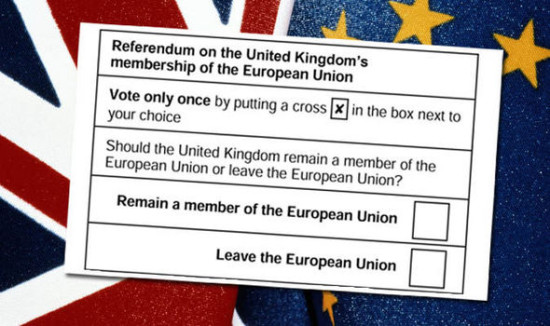
It’s just over a week to go to the EU referendum, so I thought I’d jot down a few thoughts.

To begin with, let me say what this post is not. I will not tell you how to vote, or try to persuade you which way to vote. And I will not tell you which way I will vote.

There are, however, a number of things which need to be said.

Lies, damned lies and the battle for your vote

The first is that, by and large, the conduct of both sides has been utterly appalling. That doesn’t apply to every individual involved in either campaign, and very many of the grassroots activists on both sides – of which I count many, again on both sides, as friends – have been doing their best to argue their cause in a reasonable manner.

But, still, many of the headline claims made by the leaders of both sides are, at best, pure speculation dressed up as fact or, at worst, outright lies.

We’re doomed, I tell you, all doomed

On the Remain side, the increasingly shrill warnings of economic disaster, rise in terrorism and imminent collapse of civilisation simply do not ring true. By all means, consider a worst case scenario. But a description of the most extreme possible outcomes has to go hand in hand with a realistic assessment of the risk.

If it rains hard enough for long enough, my house could be flooded. We are on the edge of the “thousand year” flood zone. But, realistically, that is very, very unlikely to happen, at least in my lifetime or that of anyone I eventually sell the house to.

The same applies to predictions of what might happen if we leave the EU. It could, theoretically, result in economic disaster. But just saying that it could is insufficient information. To be useful, that has to be part of an overall risk assessment with outcomes ranging from best case to worst case, and with informed and expert predictions of how likely all the various possible outcomes are.

It doesn’t add up

On the Leave side, the repeatedly bandied figure of £350m a week paid to the EU is simply false. And arguing that that’s the right figure to use, because it’s what we would pay if it wasn’t for the rebate, is meaningless. That’s like saying that if I buy a shirt from M&S at 30% off, I should still assess the cost on what I would have paid without the discount. My accountant would laugh at me if I did that.

It’s also simply wrong to say that, whatever we pay to the EU, we could instead spend it on the NHS if we left. That disregards all the money that is currently spent by the EU on things within the UK. The absolute most we could spend on the NHS if we left is the total net cost of EU membership – which is a heck of a lot less than £350m a week. But even that disregards the possibility that leaving the EU may incur other costs which also have to be met. Realistically, this is simply an impossible promise.

Little Britain and Big Brother

The Remain argument that the UK would have to adopt something like the “Swiss model” or the “Norwegian model” to get access to the benefits of the single market if we leave is equally specious.

The UK has a population of 64 million, and a GDP of $2,768 billion (measured in USD as that’s the common unit of comparison). Norway has a population of 5 million, and a GDP of $513 billion. Switzerland has a population of 8 million, and a GDP of $685 billion. In other words, the UK has a population nearly five times that of Norway and Switzerland combined, and a GDP more than double their combined total.

If we leave the EU, we will not need either a “Swiss model” or a “Norwegian model” in our relationship with the remaining EU. We will have a “British model”, negotiated to take account of our economic and population strength. We can’t say for certain what this will look like, but we can be sure it won’t look like anything which currently exists.

Our only goal will be the western shore

On the other hand, leaving the EU will not solve our immigration “problem”. Quite apart from the fact that it is far less of a problem than many people believe – there is absolutely zero evidence that immigrants are squeezing local-born people out of the employment market, for example – the reality is that EU migration is still lower than non-EU migration.

Given that many EU migrants would, if we were not part of the EU, fall into the same categories as the non-EU migrants allowed to come here and would therefore continue to be allowed to come in the future, the idea that we could make a sizeable dent in immigration by leaving is laughable. And that’s assuming we won’t negotiate an agreement with the EU which includes free movement of labour anyway. I strongly suspect we would, because overall, it would be beneficial to us to do so.

The face doesn’t fit

If we disregard the guff from both sides (and there’s an awful lot of it to disregard), though, what are we left with? Can we, as some suggest, make our decision based on the identities of those arguing for either option?

The answer to that is “no”. I’ve previously argued that, when it comes to a general election, you can’t just vote for policies – you have to take account of the perceived competence of those who will implement them as well. But a referendum is the complete opposite. No matter what we decide, we will still have the same government the day after the referendum as before, and we will still have the same options at the next general election.

Voting Remain because you dislike Nigel Farage, or Leave in order to snub David Cameron – or vice versa – is the worst possible reason for making your decision. Voting Leave will not put Ukip in power. Or Jeremy Corbyn, for that matter. Voting Remain is not an endorsement of the current government. The decision we collectively make on 23rd June 2016 will have an effect long after all of us currently active in politics have retired or died. Casting your vote now on the basis of which set of faces you like the most is one of the most mind-numbingly stupid things you could do. So don’t do it.

Making either choice is a decision based on what you, after giving the matter careful consideration, honestly believe is best for the UK in the long run. At least, I hope it is. And that means cutting through the dodgy headlines and looking beyond the faces to try and find the facts.

I’m not, in the space of this article, going to try and give you the facts, beyond those I’ve obliquely referred to already. But I am going to make a few observations.

Break point

After my comment on the behaviour of the campaigners, the second most important thing which must be said is that the EU is badly broken in a number of areas. That fact is, I think, beyond dispute. A full list would be far too long, but the economic sacrifice of Greece on the altar of the Euro and the mismanagement of the migrant crisis are two obvious examples. The question is not “Is there anything wrong with the EU?”. The question is “Can we fix it?”.

In this context, I disagree with the criticism of Jeremy Corbyn for seemingly being lukewarm over the EU, or with Boris Johnson for dithering before coming out for Leave. In both cases, these are the actions you would expect of someone who recognises that there are strong arguments for both options, but that ultimately you have to make a choice between them. I’m not telling you which of Johnson or Corbyn you should vote with, but both of them make a better role model here than those who adopted a knee-jerk position for either Remain or Leave right from the off.

Between the devil and the deep blue sea

The reality is that there are some very good arguments on both sides. Anyone who doesn’t recognise that simply hasn’t thought about the issue in any great detail. Equally, there are some very bad arguments on both sides. And the tragedy is that the campaign has seemingly focused on the bad arguments rather than the good ones.

The EU is, as I’ve said, badly broken in many respects, and if it continues down some of those broken pathways it has the potential to do a great deal of harm. But it has also been extremely beneficial in very many ways, and the UK has gained a lot from our membership. Again, I will say that anyone who does not recognise the truth of both these statements has too little understanding to make an informed choice.

Questions, questions

Ultimately, everyone’s decision has to be their own. I’m not telling anyone how to vote, or how I intend to vote. But I will pose a set of questions that will inform my own choice. Hopefully, they will be helpful to others as well. Those questions are:

  1. Are the EU’s structural flaws beyond repair, or can they be fixed?
  2. In the long term – not just the next few years, but for the next generation – which option offers the best prospects for our economic security and freedom?
  3. Is a decision to leave influenced by the “grass is always greener” fallacy?
  4. Conversely, does a decision to stay reflect the sunk costs fallacy?
  5. Which decision will I be most proud of explaining to my children, and why?

I’ll leave it to you to answer those questions for yourselves, or to pose others. I may come back after the vote and explain how I answered them.

24 November 2015
by mark
0 comments

Christmas creativity needed

I was in Morrisons this afternoon, and noticed that they’ve already started playing Christmas songs. Modulo the usual complaint that the third week in November is too early, it occurred to me that we really need some new Christmas songs. It’s OK to be playing all the traditional favourites, but the problem is that all we seem to have are the old traditional favourites. The Christmas single used to be a staple of the musical season, but bands seem to have largely given up on them in recent years.

Personally, I blame Simon’s Karaoke Show. By creating a guaranteed Christmas number one that’s there on the back of pure marketing hype, not merit – or even unpredictable random popularity – it’s put other artists off trying to aim for the traditional year-ending chart topper.

Maybe the forthcoming demise of the show – it’s widely rumoured that this year will be the last, and not a moment before time – will open up the opportunity for a genuine battle for the Christmas number one, just like we used to have. If so, then maybe there’s an opportunity there for some of our current best-selling artists to come up with something suitable festive.

I’ve got nothing against the likes of Slade, Wizzard, Jona Lewie or Ella Fitzgerald, but they’re hardly contemporary. I reckon that Ed Sheeran or Adele could come up with a cracking Christmas tune. Heck, I’d even put up with something by Justin Beiber or One Direction, if it’s at least original and fresh. So come on, musicians, how about taking up the challenge for Christmas 2016?

6 October 2015
by mark
4 Comments

An unpleasant encounter

I’ve been at the Conservative party conference this week. As you may have seen reported by the media, there’s been a group of protesters outside the venue most of the time, although they tend not to be there earlier in the day and have usually dispersed by early evening so I haven’t encountered them at close quarters all that much. And, despite some of the media stories, I personally hadn’t seen anything that I would say crosses the bounds of acceptability.

This evening was different. And possibly instructive.

It’s been raining most of the evening, and I managed to miss out on the canapes at the Tech Central reception, so I decided that instead of walking straight back to my hotel I’d stop at the Subway just across the road from the venue and have something to eat there.

I wasn’t alone in that. There were several other conference-goers in the cafe, plus a group of protesters as well as regular, non-political customers. Initially, there wasn’t any problem. But then something happened to change that.

I’m not entirely sure what the trigger was, because I was fiddling with my phone (tweeting about the rain!) rather than following the conversation around me. But it suddenly kicked off between a group of female protesters and a man sitting at the next table, and before I knew it there was a full-scale shouting match going on.

It turned out that he was one of the staff at the conference, and took exception to being labelled “scum” when, as he pointed out, he’d done exactly the same job at the Labour and Lib Dem conferences and would next be off to Scotland to work at the SNP conference.

The protest group were not placated by that, and instead condemned him for being a class traitor for daring to work for us Tory scum.

At this point, and possibly somewhat unwisely, another conference-goer (aka, “more Tory scum”) intervened, asking everyone to just calm down a bit and let people eat their meals in peace. As you might expect, this didn’t work. Although a man who had been part of the group of protesters muttered “Actually, I agree with them on that”, and got up and walked out, leaving just the women to continue abusing every Tory scum in earshot. Almost immediately after he left, the police arrived.

I should point out here that there was no violence or threat of violence, even implied. Somewhat bizarrely, even, we were all sitting at a group of tables in a corner of the cafe and, despite being in touching distance of each other, no hands were raised. It was all purely verbal.

However, I’m sure it wasn’t pleasant for everyone else in the cafe, and when the police arrived they asked the protesters to leave. One of them then started abusing the police, at which point she was rather more firmly instructed to step outside, and the rest soon followed.

After they’d gone, I got chatting to the man who’d been the catalyst for all that. He apologised for saying something which had triggered the incident, but, as he put it, he’d been roundly abused every day just for doing his job, and he was sick of it. And all he did was say so, which resulted in yet more abuse.

I don’t object to people protesting. Nor do I mind the street theatre aspect of it with banners and placards and drums and whistles. I even (whisper it quietly) found the TV images of Boris being pelted with plastic balls rather amusing. OK, it’s a bit childish and unnecessary, but it isn’t in the same league as eggs or stones. Taking abuse is part of a politician’s lot in life, and most of the time it’s good-humoured enough not to worry too much about.

But it hasn’t been OK all the time this week. To be sure, most of the protesters have been careful to stay within the boundaries. But the line has been crossed on too many occasions as well. It isn’t OK to spit on people as they arrive at a conference. It isn’t OK to abuse people for working at a conference. And it isn’t OK to defend the people who do those things.

We also have to ask ourselves why some elements of the left of British politics are so virulently illiberal and intolerant. If Jeremy Corbyn really wants to usher in a new, kinder politics then he has to start by cleaning out his own back yard.

12 September 2015
by mark
0 comments

Throw your emails in the air like you just don’t care

I received my first batch of template emails from 38 Degrees recently.

As a general rule, most of their mail-bombing campaigns are aimed at MPs, rather than councillors, so they tend not to come our way. But the recent announcement by the Prime Minister that the UK will take several thousand Syrian refugees and then distribute them across local councils has made it a local issue, and many people are, understandably, keen to let their own councillors know their opinions.

That much I don’t have any problem with. It’s a genuine local issue, and I welcome emails from local residents on any matter which directly affects them, or may potentially do so. What I am less happy with, though, is the use of identikit mass emails as a tool.

There are all sorts of reasons why using a pre-filled email template is a bad idea. I won’t go into all of them in detail, as there’s already an extremely good explanation of why you shouldn’t use them on the WriteToThem.com website. However, having not received any personally until a few days ago, I couldn’t speak from personal experience. So, having now got a bunch in my inbox, these are my thoughts.

The couch activist’s digital cop-out

Like most councillors, I get a fair number of emails from constituents. They cover a wide range of issues, although the two most common are planning applications and dog poo. They also vary a lot in content; some are lengthy screeds and come complete with attachments of supporting documentation, others are brief “I’ve got a problem with X, can you help?” type messages.

One thing all these emails have in common, though, is that they are in the sender’s own words. And another is that they are almost always the start of a conversation rather than a one-off message.

The 38 Degrees emails, though, have neither of these characteristics. All of them have had campaign-ese wording which clearly isn’t that of the sender, and mostly doesn’t even relate to my role as a councillor or to the specific wards that I represent and the councils that I sit on – it’s just generic boilerplate. And, although I’ve replied to all of them, none of the senders has made any further contact.

When someone takes the time to look up my email address, and then compose an email about whatever is bothering them, I know it’s something they care about. They have put effort into it, or at least are planning to – even if all they want me to do is phone them, they’re willing to spend the time talking to me. I also get a feel for the personality of the sender and how strongly they feel about something.

With the 38 Degrees emails, I get none of that. Sending a campaign email via 38 Degrees is trivially easy, and requires no knowledge about either the subject matter, the person the email is being sent to or the public authority that they represent. All you need to do is go to a website, enter your name and postcode and click a button. It’s a throwaway, inconsequential act that treats serious subjects, such as the Syria crisis, in the same way as expressing an opinion on which boy-band is better or which chocolate tastes nicer.

Participating in a 38 Degrees mail-bomb doesn’t show that you care about the subject. On the contrary, it shows that you really don’t care at all. Because if you really did care, you would take the time and make the effort to get in touch directly, in your own words.

Veruca Salt’s campaign class

As it happens, I do actually support the government’s plans to resettle Syrian refugees in the UK, and I’m confident that my local authority will be capable of doing whatever is necessary locally. To that extent, I agree with the emails I’ve received. But the details are all still to be finalised, as things stand, and in any case I’m just one of many councillors and have no ability to set council policy or dictate what will be done. So an email demanding that I “ensure” that the council takes in refugees and gives “immediate” sanctuary to them is heading towards moon on a stick territory.

Asking for something that I, personally, cannot deliver is pointless. By all means, ask for my support in your campaign to get the council to do something. You may or may not get my support, but you’re perfectly entitled to ask for it. Or ask what my position is on a policy, and I’ll usually be happy to tell you. But simply demanding that I do something is just plain daft. Even if I agree with what you want to happen, I can’t do that.

This is where it gets even more silly. I’d be a lot more tolerant of seemingly unreasonable emails if they were directly from a constituent and written in their own words. I don’t expect everyone in the ward to know how local government works and what my responsibilities are. But, of course, these emails aren’t written by the people whose name appears on them. They’re written by some faceless and unaccountable activist at 38 Degrees.

Given that their style makes them instantly recognisable as being from 38 Degrees (even though the email itself does its best to hide the true origin), they’re almost certainly being written either by the same person, or a small group of people. In which case, these people ought to know how government, including local government, works. They are, after all, trying to persuade us to do something. You’d have thought they’d at least make the effort to find out what form of persuasion is most effective.

So, what we have is a mass-mail campaign being run by people who don’t really care whether their emails are persuasive – they just want to make sure we have the inconvenience of having to read them – and sent by people who can’t be bothered to do anything more constructive. If anyone really thinks this is a helpful way to engage in the democratic process, then they are sadly mistaken.

29 June 2015
by mark
3 Comments

Actually, most people are happy with the result of the general election

One of the assertions that I keep seeing on social media and other websites is that only a minority of people voted for the current government, with the implication that it therefore lacks both popular support and legitimacy.

It’s become something of a self-replicating meme, particularly among those who still haven’t come to terms with the fact that their opinions weren’t shared by the majority of voters. I see it so often that I’ve decided to respond to it here, so that in future I can just point people at this article rather than having to type all of this every time.

Usually, this claim takes the form of pointing out that around 37% of votes were cast for the Conservatives, although some (such as Astroturf campaign group 38 Degrees) like to go further and assert that only 24% of the electorate voted for them on the basis that you have to take account of non-voters as well.

While technically true, however, this does not in any way support the implication that most people don’t support the current government.

For a start, the largest proportion of votes cast were for a centre-right or right-wing party. If you add up the votes for the Conservatives, UKIP and the DUP then you get a bare majority (just over 50%) of all votes cast.

Given that there were only two realistic options for who would be Prime Minister, anyone voting for any party other than Labour or the Conservatives would only expect to be in power as part of a coalition. UKIP and the DUP are both broadly right of centre parties, although their agendas differ greatly. So a vote for either of them was a vote for a right of centre government. And the only right of centre government which is in any way plausible is one in which the Conservatives are the largest party and David Cameron is Prime Minister.

Even if we had full proportional representation, therefore, we’d still have David Cameron in Downing Street and most government ministries run by Conservatives.

However, the people who voted for overtly right of centre parties aren’t the only ones who would be happy with that. A small, but non-trivial, number of Lib Dem voters would consider themselves centre-right rather than centre-left. The “Orange Book” Lib Dems would almost certainly be happier with a Cameron-led government than one led by Ed Miliband.

Then there are voters in Scotland who are nationalists first and conservatives second, and therefore voted for the SNP despite, rather than because, it’s a left of centre party. They, too, are presumably happy with the outcome of the SNP dominating Scotland with a Conservative government in Westminster. There may not be all that many of them, but the certainly exist. So we can add them to the overall total of supporters of a Conservative-led government.

OK, but what about the non-voters? Well, there are many reasons for not voting, but a general “none of the above” attitude is not the most common. Research suggests that antipathy to all the parties only amounts to around 15%-20% of non-voters. For the rest, apathy, disinterest and practical issues (such as being unable to arrange a postal vote in time) are what stopped them voting.

Of the apathetic voters, many of them are apathetic because they genuinely don’t care who runs the country. They can, therefore, be presumed to be, if not exactly happy, at least comfortable with the result of the general election in May. It is true, of course, that they’d also have been equally comfortable with a Labour government. But they can’t be assumed to be opposed to the current government.

For the rest, research also suggests that if voting were compulsory (as it is in Australia), non-voters would divide among the parties on offer in much the same proportions as actual voters. So if all those non-voters had voted, it would have increased the number of votes cast for the Conservatives more than it would have increased the number of votes cast for any other party. And the overall proportion of votes cast for the Conservatives would have remained unchanged.

It is, therefore, statistically indisputable that the majority of the UK electorate, at the 2015 election, preferred a right of centre government. The only area of difference is that some of them preferred a single party government while others preferred a coalition.

We can also look at this another way. A majority of the electrate wanted a right of centre government. Of those who did, a majority wanted a single party government. So a single party, right of centre government is the result that is the best fit for the largest number of the electorate. If, instead of voting for individual candidates in individual seats, we’d had a single election for four options…

A: left of centre coalition
B: left of centre single party
C: right of centre coalition
D: right of centre single party

…and used a ranking vote system, such as AV or Condorcet, to choose between them, then (barring some really weird ranking choices) option D would have won.

However you slice and dice it, you always end up wih the “right” result being either a Conservative government or a Conservative-led coalition government along with other right wing parties. There is no valid argument which results in any left-wing party being in government.

It’s not unreasonable to make the argument that a coalition of multiple right-wing parties would have been a better reflection of the overall preferences of the electorate, although even that has its issues (why should UKIP have been part of the government when Labour, who got considerably more votes and seats, are not?). But the one thing that you cannot honestly argue – or imply – is that there is some kind of “anti-Conservative majority” in the UK.

27 June 2015
by mark
1 Comment

Killing the golden goose

I installed Adblock on my computer the other week. I’m well aware that this opens me up to charges of hypocrisy, given that online advertising is an essential part of how I earn a living – both in my day job, where we use advertising to get customers, and in my spare time business where I make money from adverts on my own websites. If everybody installed Adblock and used it in full, both of those would suffer considerably.

For that reason, I’ve made a point of setting Adblock to be disabled by default, and only enable it for specific websites. The websites that I enable it for (and it is still only a small proportion of those I visit regularly) are those which have egregiously intrusive advertising.

This isn't actually an ad. It's just a screenshot of one.

This isn’t actually an ad. It’s just a screenshot of one.


In particular, I enable Adblock on sites which have adverts that autoplay audio, that overlays the content of the page in any way, or that cause the content of the page to move, reflow or reformat after it has initially loaded.

I’m less bothered about autoplaying video, so long as it’s contained within a predefined border of an advert that doesn’t otherwise intrude into the rest of the page. But autoplay audio is a complete no-no. Do that, and it’s an immediate block. It’s also an immediate block if an advert causes the content of a page to shift or reflow after I’ve started reading it. Which is why I no longer see adverts on The Guardian’s website, for example.

One annoying form of advert in particular seems now to have become endemic on newspaper websites. It’s the one which doesn’t seem to be there to begin with, but then suddenly appears in the middle of the content as you scroll down. I’m sure you’ve all seen them. I’m equally sure that you all, like me, hate them. As it happens, they were mentioned in the Feedback section of The Times today:

I really don’t like the pop-up video adverts in the middle of articles on your website,” wrote AC Ruston. “There’s even one in the guidance on how to complain, for heaven’s sake. They’re an annoying distraction, and in some articles they are totally inappropriate.”

This complaint was followed by several others, and ended with an admission by the newspaper that using them was wrong:

We got the message and, as it happens, we agree. Advertisements shouldn’t interfere with the enjoyment of reading a newspaper or a website. We’ve asked the advertising department to remove this campaign.

Now, it’s easy to argue that The Times doesn’t need to use them, because, unlike most newspaper websites, it is subscription only. So advertising income is an add-on, and a fairly trivial one at that (since the paywall keeps most people out to begin with, and hence makes adverts far less valuable as the number of viewers is tiny by comparison with other national newspaper websites). Other newspapers, it can be argued, really need the advertising revenue.

The challenge of paying for free content has always been there. Research shows that up to 80% of users are unwilling even to consider paying for content. But even the 20% who are theoretically willing to pay rarely do, in practice. Traffic to The Times’ website now is less than a tenth of what it was before the paywall. News UK, owner of The Times, has backtracked on a similar “solid paywall” on the Sun’s website following an equally drastic drop in traffic. For news websites in particular, social media is an important driver of traffic – but there’s no point sharing a link to a story that most of your friends or followers can’t read.

The failure of pure subscription based models means that advertising is always going to be a key revenue source for the vast majority of websites. So maximising that revenue is important, and if another form of advert comes along which pays more – which these in-content video ads certainly do – then using them is very attractive.

If my experience, though, and that of the contributors to the Feedback column of the Times, is anything to go by, these adverts are almost universally disliked. And it isn’t a big step from disliking the adverts to finding a way of blocking them.

Unsurprisingly, use of adblockers has grown significantly over the past few years. Reliable statistics are hard to come by, but some estimates suggest that usage increased by nearly 70% between 2013 and 2014, with anything from 5% to 50% of ads blocked, depending on the website.

That’s a problem. It’s a very real problem. And it isn’t just a problem for websites which have excessively intrusive ads. Because when people install adblocking systems, they are quite likely to just accept the default of blocking all adverts, everywhere. Which means is that sites which don’t have don’t have intrusive adverts – which don’t autoplay audio, or relocate/obscure content – get their adverts blocked as well.

If the trend towards more and more intrusive adverts continues, therefore, the websites which use them will end up killing the golden goose that they rely on. And in turn take down the advert-supported economy of millions upon millions of small-scale websites which don’t have the resources to find alternative income. If that happens, it won’t just be those of us who rely on the advertising economy who will suffer. It will be every web user.

27 May 2015
by mark
0 comments

American Idiots

I was an early adopter of Gmail, so I have a fairly short and simple Gmail address. Unfortunately, that means it’s only a typo away from plenty of other short Gmail addresses, so I get a fair amount of email intended for someone else because of misspellings.

I also get a lot of email intended for someone else because they wrongly believe that they own my email address. I have no idea why they think that, but it seems to happen a lot.

Anyway, one of the emails I got recently intended for someone else was this one:

eticket

That, as you can see, is an American Airlines e-ticket. Obviously, the fact that I got it means that the intended traveller didn’t, which means that unless he sorts it out he won’t be taking his flight.

He must have realised that himself, because about a week later I got the same e-ticket again. I presume he had phoned customer services and complained about not getting it, so they had helpfully re-sent it. Except, of course, they re-sent it to the same, wrong address, so he still didn’t get it.

Anyway, this time I decided that I’d try and be helpful, so I replied to the email and told them:

I have no idea why this has been sent to my email address, as I am not Gary Marks and I did not buy this ticket. Please can you amend your records.

That prompted an auto-response, which is what I’d expect. Unfortunately, what I didn’t expect was that the person dealing with the issue would entirely fail to understand what the problem was. Here’s the eventual response:

response

This, in full, is what it said:

Dear Mr. Goodge:

Thank you for contacting Customer Relations.

Based on the information you have requested, I have determined that our reservation personnel can better address your concerns. They can be reached via 1-800-433-7300 and are available to assist you 24 hours a day, 7 days a week. If you are calling from outside the United States or Canada, please click on the URL below to determine the reservation center or General Sales Agent nearest you. Please have your flight details readily available to provide the representative.

www.aa.com/i18n/utility/internationalReservationsPhoneContact.jsp

Should you require similar assistance with reservations in the future, we recommend you call the above number for a more expeditious response. We have an around-the-clock dedicated staff of professionals eager to resolve concerns for customers holding open reservations. If you still have questions or concerns after your trip is completed, we’d be happy to hear from you in Customer Relations.

Mr. Goodge, thank you for bringing this to our attention.

Sincerely,

Lourdes Foyt

Customer Relations

American Airlines

This is the wrong response on so many levels that I don’t really know where to start. So I might as well end with this.

23 May 2015
by mark
0 comments

Election reflections

General-Election-2015The elections seem a long time ago already, even though it’s only just over a couple of weeks. But I can still feel the sense of exhilaration when, firstly, the exit polls confounded the pre-election predictions and then the real results were even better than the exit poll had predicted. It’s been a long time since I genuinely felt so optimistic about the future of our country.
That’s better, of course, from my perspective. And that of other Conservative voters and candidates, as well as, probably, SNP supporters. Obviously, it wasn’t better for Labour, UKIP or the Lib Dems. In politics, as in sport, one side’s victory is another side’s defeat. The Blues have triumphed, the Reds have lost out, and it doesn’t matter whether you’re talking about Parliament or the Premier League; the feelings of agony and ecstasy are broadly the same.

Why did we win, though, and why was the margin of victory bigger than expected? This is something that commentators haven’t been short of opinions on, so there may not be much that’s original in mine. These, though, are my thoughts.

In the end, Ed Miliband failed the Kinnock Test.

Times columnist Daniel Finkelstein came up with this theory back in 2008 (paywall, but you can get the gist from the opening couple of free paragraphs), and I, along with many others, successfully predicted the outcome of the 2010 election on the same principle. The electorate concluded that, even if they found his policies attractive, Ed Miliband simply wasn’t up to the job of being Prime Minister.

The Conservatives did a better job of appealing to floating voters.

This is related to my first point, and I explained it in more detail back then in 2009 when I correctly predicted defeat for Gordon Brown. But, in essence, the simple fact is that floating voters, by definition, are not party loyalists. Moreover, they are not primarily politics geeks and often care little for detailed policies. Instead, they will vote for the party that they believe offers the best prospect of a secure and prosperous future. In 2015, as in 2010, that party was the Conservatives.

People voted for hope, not fear.

A huge part of the opposition’s campaign was the prospect of all the bad things that might happen if the Tories got back in. Cuts to the NHS, cuts to welfare, giving US corporations power to sue the British government, forcing small children to work down coal mines. OK, so that last one is made up, although it still fits in with the narrative. Then there were the very different fears peddled by UKIP: the prospect of the UK being overrun by nasty foreigners. Maybe not stated in so many words, but implied in a lot of what was actually said. But, on the whole, the voting public didn’t swallow any of them. The Conservative campaign was more positive, and more people responded positively to it.

(As an aside, this also goes a long way to explaining the success of the SNP. For those north of the border, the nationalists offered a positive option, something to vote for rather than simply against.)

On the whole, the political centre of gravity in the UK is inclined to the right.

This may seem like an obvious point, given that a right of centre party won. But to listen to a lot of left-wing commentators you’d think we somehow stole the election from an otherwise left-leaning public. And that’s why it deserves a little more consideration.

An email from left-wing pressure group 38 Degrees contained the claim that “only 24% of the population voted for the winning party”. Which is true on a purely factual basis, but if the intention is to assert that only 24% of the public are happy with the result then it’s completely false.

Of those who voted, almost exactly 50% cast their ballot for a right-wing party (if we assume, not unreasonably, that the Conservatives, UKIP and the Unionist parties in Northern Ireland are, to a greater or lesser degree, right-wing). But you can also add to those the voters in Scotland who backed the SNP despite, rather than because of, its left-wing stance because they are nationalists first and right-wingers second. They may not be a particularly large number, but they certainly exist. And it’s also fair to describe the “Orange Book” wing of the Liberal Democrats as more centre-right than centre-left. Again, there may not have been all that many of them, given the Lib Dems’ disastrous election night, but they, too, certainly exist. So, overall, you can’t really to deny that a majority of the voting public are happy with, at the very least, a Conservative PM in Downing Street even if some of them might have preferred him to be accompanied by a coalition deputy.

As for those who didn’t vote at all, while it’s tempting (to left-wing commentators looking for excuses, anyway) to lump them in with everyone else who didn’t vote Tory, it’s equally true that they can be lumped in with everyone else who didn’t vote Labour – which is a much larger number. In reality, though, research suggests that the majority of non-voters would, if forced to vote, divide between the parties in much the same proportion as those who chose to vote. And, of course, there are many people who don’t vote, not because they oppose all the parties and politicians on offer, but because they would be happy with whoever won. If Ed Miliband was PM, they’d be happy with him. But, as it is, they’re equally happy with David Cameron.

What that adds up to is the simple fact that the majority of the electorate, whether they actually voted or not, are more or less happy with the outcome of a Conservative government. Some may be very happy with it, others more grudgingly so, but nonetheless they all prefer it to the alternative.

It really is the economy, stupid.

If the previous reasons are essentially symptoms, this is the one which gives rise to them. On the whole, people believe that the state of the economy, and its prospects for the future, is what really matters. Which is why people were willing to vote for the possibility of continued austerity and a tight rein on public spending. It also shows that the electorate are possibly better at taking the long-term view than many politicians give them credit for. More people voted for jam tomorrow than jam today. Which is another reason to be optimistic for the future.

16 April 2015
by mark
0 comments

The question that hasn’t been asked

I’ve been watching the “Challengers’ Debate” this evening. I watched the Leaders’ Debate the other week. Yesterday, I was at a local hustings meeting with our own local candidates for Mid Worcestershire.

At all of them, many questions were asked. But one subject was a glaring absentee at all of them.

Obviously, with time being limited, it’s impossible to ask every question. So, just on the off-chance that any politician competing for my vote happens to read this, this is the question that I would have asked:

We’ve heard a lot about people who don’t pay tax. Tax dodgers, users of corporate tax havens. But I want to ask a question about those of us who do pay tax.

Like most people with a job, I pay tax. Several taxes, in fact.

Income tax. National Insurance. Council tax. Value Added Tax. Vehicle Excise Duty. Fuel Duty. Beer Duty. Wine Duty. I don’t smoke, so I can’t complain about Tobacco Duty, although I’m sure many other people here will. But I did get stung by Stamp Duty when I bought my house.

And it isn’t just me. Take a walk along our High Street, and you’ll see empty shops. Step inside the open ones, and you’ll hear stories of how difficult trading can be. When I talk to local shopkeepers, I hear over and over again how business rates can be crippling. When they do manage to scrape a profit, they are taxed on it at rates higher than in many other countries, including the ones which are our biggest online competitors.

So my question for the panel is simply this: How do you plan to reduce this burden on me, on my family, and on my community?

3 April 2015
by mark
2 Comments

Zero Thought

One of the subjects that cropped up in the Leaders’ debate yesterday evening was zero hours contracts. Ed Miliband wants to effectively abolish them. David Cameron’s response was that Labour have a “zero jobs” approach. In the double-header interview previously, Jeremy Paxman had repeatedly pressed David Cameron as to whether he could work live on a zero hours contract, finally eliciting the answer that no, he couldn’t.

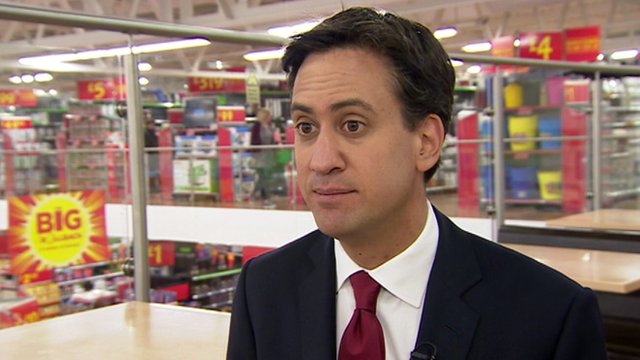
Zero Thought Ed

So, what is it about zero hours contracts, and why are they a political hot potato?

To begin with, zero hours contracts are not a new thing. The phrase is simply the current jargon term for what used to be known as “casual labour”. As ACAS puts it:

The term ‘zero hours’ is not defined in legislation, but is generally understood to be a employment contract between an employer and a worker, which means the employer is not obliged to provide the worker with any minimum working hours, and the worker is not obliged to accept any of the hours offered.

That’s important, because to listen to some politicians you’d think that zero hours contracts are some recently invented device intended to exploit workers who would otherwise have “proper” jobs. But that’s not the case. Casual labour has always played a major role in employment, particularly in sectors where demand is variable and hence the need for staff is equally variable. Catering and service industries tend to be the main users of casual labour, but manufacturing and retailing also use it to meet seasonal demand.

The term “zero hours” became more popular as a result of the minimum wage legislation introduced by Tony Blair’s administration in 1998. A consequence of the new law was that employers couldn’t just pay casual staff for the work they did, because the minimum wage is based on contracted hours rather than actual performance of duties – someone sitting around doing nothing had to be paid at least minimum wage while doing nothing, so long as their employment contract considered them to be at work while waiting to be assigned a task. So casual employment contracts were changed to make a clearer distinction between “at work” and “not at work”, and made it equally clear that a casual employee was only at work when called on to actually do work.

This made no difference to the actual practice of how casual labour is organised. It was simply a way of making sure that employment contracts were compatible with the new legislation.

The second key fact is that there hasn’t been a huge growth in zero hours contracts under the current administration. Again, if you listen to certain politicians you might get the impression that all the growth in employment over the past five years has been insecure casual work. But this simply isn’t true, as an article on the BBC website makes clear. Zero hours contracts make up only around 2.3% of the workforce.

Interestingly, though, the article does show a significant increase in the number of people reporting that they are on zero hours contracts – up from around 586,000 to 697,000 people. But a lot of these are people who had been on the same contract a year before. So they were on a zero hours contract, but didn’t call it that the previous time they were surveyed.

That goes back to my first point. Zero hours contracts are not new. It’s just a relatively new name for a long-established system. So a lot of the apparent growth in zero hours contracts is simply a result of more people using the term – quite possibly as a result of being misled into thinking that it’s somehow different to casual work.

Having established that zero hours contracts are neither new nor unduly numerous, does that mean there’s no problem with them?

Well, yes and no. Obviously, there are people who actually want to work casual labour. And there are many reasons for that. Casual labour is an established first step into the first step into the employment market for teenagers after leaving school, often as a means of gaining experience that will stand them in good stead for getting a better, and more well-paid, job afterwards. Seasonal casual labour is also a common source of top-up income for students during the holidays. Some people want to work part time, and are happy with a flexible arrangement which means they aren’t tied to fixed hours. And casual work is not necessarily badly paid – while a lot of it is at the lower end of the salary spectrum, there can be good money to be made doing casual skilled work if you have the skills.

Anything which effectively abolished casual labour would, therefore, clearly be a bad thing. A lot of the zero hours jobs which currently exist wouldn’t convert into full time jobs, they would convert into no jobs. It would deny flexibility to the people who want to work like that, and it would make it much harder for businesses with variable demand to meet the needs of their customers. So it would be bad for consumers, too.

There are, though, some people on zero hours contracts who would prefer to have full time jobs – or, at least, to have guaranteed hours on a part time job. These are obviously the people that Ed Miliband is hoping to appeal to with his promise to make zero hours contracts automatically convert into fixed hours contracts after a set period of time. And there are issues with lower paid casual jobs and benefits, particularly in the way that they interact with housing benefit, working tax credit and jobseeker’s allowance. It’s a lot easier to get employment-related benefits when you’re on fixed hours than it is when your hours, and hence your earnings, are variable.

Again, this isn’t new, and it isn’t a growing problem. It’s one of the downsides to casual work, and always has been. But it is, nonetheless, a problem for some people, even if not as many as you might have been led to believe. So how do we address it?

Well, one option is to do something with the benefits system so that it doesn’t penalise casual workers. This is the approach which I would expect a concerned Labour politician to take. It fits in with the basic principle that benefits should be on the basis of need, and avoids affecting people who are in casual work by choice and are not suffering financially because of it.

The downside, of course, is that doing so will cost money, because it increases the total welfare bill and adds to the complexity of administering it. And that’s a very good reason why Ed Miliband doesn’t want to go down that route, because he knows that he won’t be able to afford it. So, instead, he’s intending to fix the problem by loading the costs onto businesses, consumers and workers and hoping that nobody will notice.

Neither of those, though, is the ideal solution. A better approach is to look at the reasons why there are people in casual work who would prefer a full time, or fixed hours, job.

Apart from the small number of people who are reduced to low-grade casual work simply because they are too incompetent for anything else, most people who are doing casual work but would prefer fixed hours are doing casual work as a stop-gap while they look for a better job. So the best solution is to make sure that there are plenty of better jobs available.

One of the biggest weapons an employee has against an exploitative employer is the ability to look elsewhere. The freedom to hand in your notice and take up a better offer elsewhere is fundamental to a healthy labour market. By contrast, where there is a shortage of jobs, unscrupulous employers can treat their workforce badly in the knowledge that their staff have nowhere better to go.

In the long run, therefore, the only effective solution to the problem of too many people being unwillingly on zero hours contracts is a healthy, prosperous economy with plenty of jobs – of all sorts, at all levels, full and part time, flexible and fixed hours, skilled and unskilled.

That’s the solution that I prefer. I think it’s the solution that most people who actually care about making things better for people who want a better job would prefer. And I think it’s extremely telling that Ed Miliband doesn’t prefer it.